About Our Labs
At HIMB, over 200 passionate faculty, researchers, and students leverage our unique setting—surrounded by a living coral reef—to conduct cutting-edge research and create future-oriented solutions at scale.
Loading
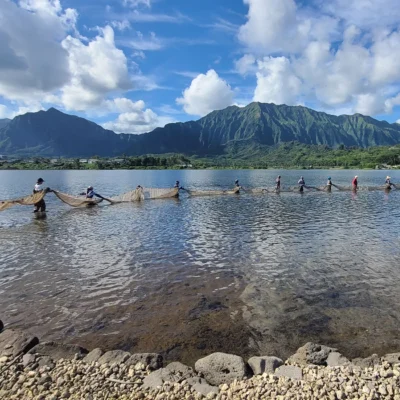
He‘eia National Estuarine Research Reserve (NERR)
He‘eia NERR is a federal, state, and community-based partnership, committed to a vision of ‘āina momona - resilient estuaries and watersheds where human and natural communities thrive.
Led by Kawika Winter
Explore The Lab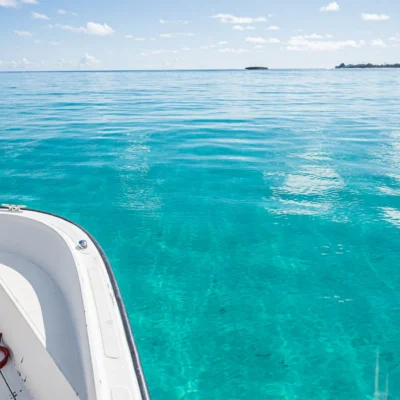
Rappé Laboratory for Aquatic Microbial Ecology
We aim to understand the impact of microbial genetic diversity on ocean ecology, and we interpret this diversity through the lens of functional adaptation and evolution.
Led by Michael S. Rappé
Explore The Lab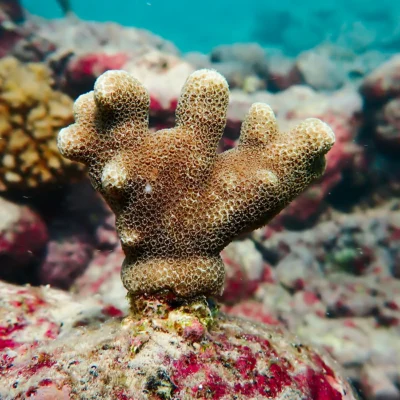
Coral Resilience Lab
We aim to understand the many complex ways in which corals respond to a changing environment, with a focus on climate change.
Led by Crawford Drury
Explore The Lab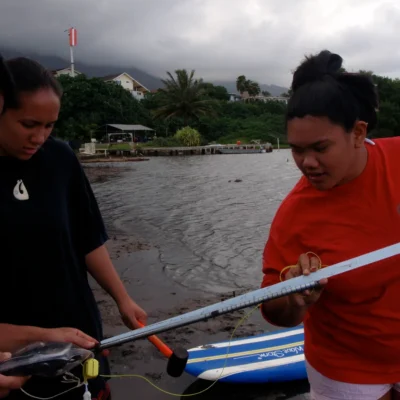
Lemus Maker Lab
We use community-based participatory research as an approach to science education and outreach, and develop learning environments that explore and encourage the synergies between science, art and service.
Led by Judith Lemus
Explore The Lab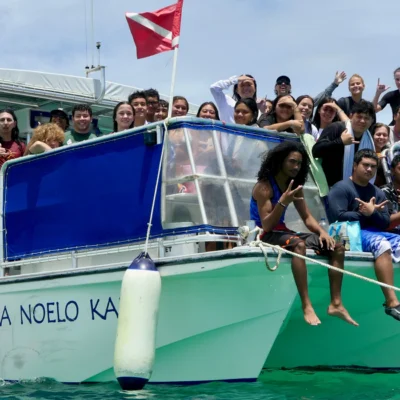
KeaoaLo‘e REMS Lab
Our lab focuses on marine science training and education research.
Led by Malia Rivera
Explore The Lab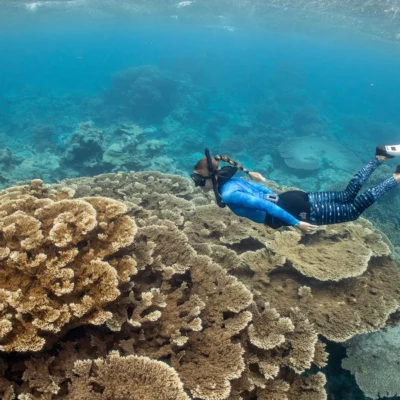
Coastal Systems Ecology Lab
Our research program is instrumental in understanding reef resilience and directly informs local management strategies and global ecosystem forecasts.
Led by Megan Donahue
Explore The Lab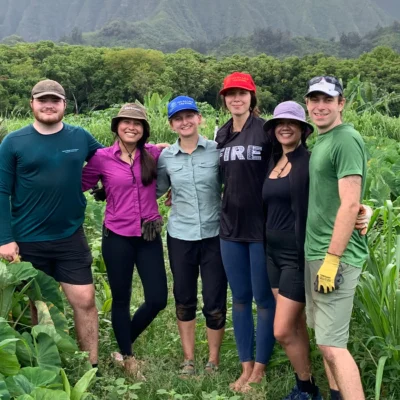
Marine Ecological Theory Lab
We develop mathematical and computational tools to predict marine ecosystem responses to environmental change, focusing on coral reef dynamics, adaptation mechanisms, and human-environment interactions.
Led by Lisa McManus
Explore The Lab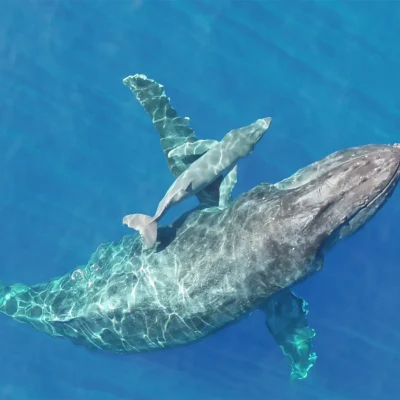
Marine Mammal Research Program
Our research focuses on marine mammals and other marine megafauna.
Led by Lars Bejder
Explore The Lab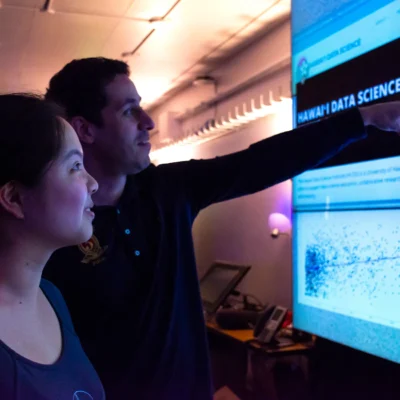
Scalable Informatics Lab
Our research centers around the utilization of machine learning and large-scale language models (AI), with a specific emphasis on their application in viral ecology and proteomics.
Led by Mahdi Belcaid
Explore The Lab
Franklin Lab
The Franklin Lab performs research in quantitative marine ecology, fisheries science, marine population dynamics, ecological restoration, invasive species, and ecoinformatics of coral reef ecosystems.
Led by Erik Franklin
Explore The Lab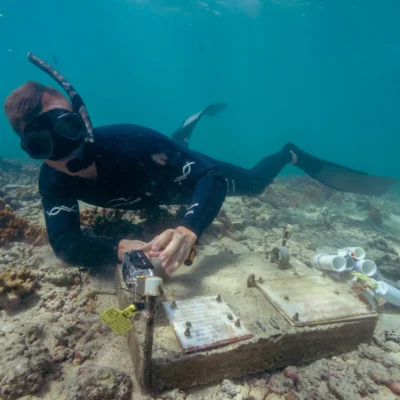
Johansen Fish Resilience Program
We study how tropical coral reef fishes (and octopus) react and adapt to natural and human-induced environmental stressors.
Led by Jacob Johansen
Explore The Lab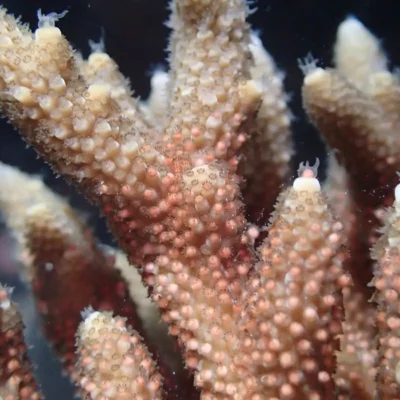
Smithsonian Cryopreservation Lab
Our lab leverages innovative, interdisciplinary research to address conservation challenges for threatened coral reefs.
Led by Mary Hagedorn
Explore The Lab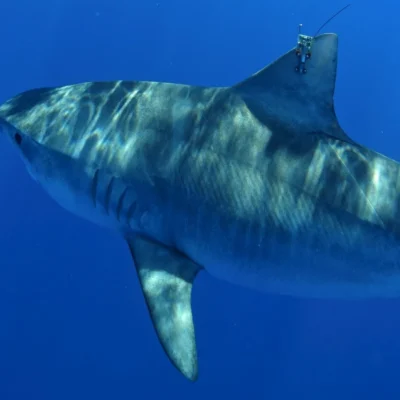
Shark and Pelagic Fisheries Research Group
We focus on studying the behavior, sensory physiology and movement patterns of sharks and other fishes, especially pelagic species. This is accomplished through a combination of laboratory and field experiments.
Led by Kim Holland
Explore The Lab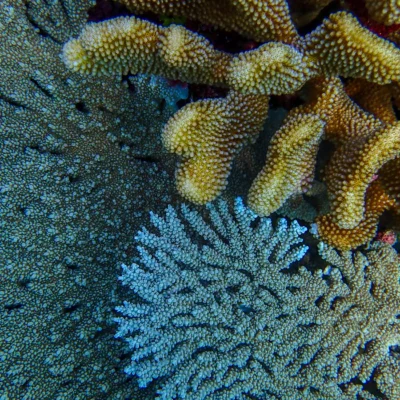
The Donovan Lab
We incorporate quantitative spatial ecology, resilience theory, field ecology, data synthesis, and statistical modeling to generate insights into the function and resilience of social-ecological systems.
Led by Mary Donovan
Explore The Lab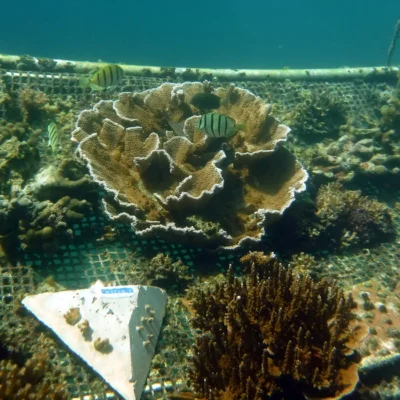
ToBo Lab
We work on an array of organisms across the metazoan tree of life, from sponges to vertebrates, to illuminate the underlying mechanisms behind differences in dispersal, distribution, and speciation.
Led by Rob Toonen and Brian Bowen
Explore The Lab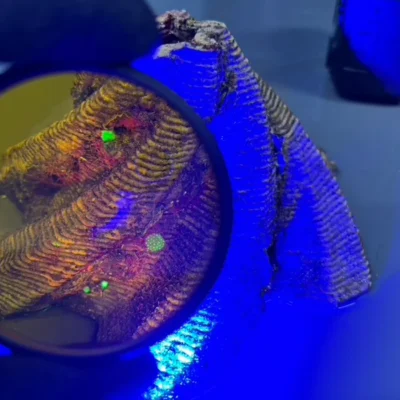
Marine Conservation Innovation Group
MCIG develops and applies advanced science, design, and technology to understand, protect and restore marine ecosystems.
Led by Joshua Madin & Elizabeth Madin
Explore The LabDive Deeper Into Marine Science at HIMB
HIMB's research focuses on understanding and protecting tropical marine ecosystems, blending expertise across different fields. We leverage local and global partnerships to ensure our work advances the understanding and protection of the oceans, locally and globally.