HIMB Researcher Dr. Brian Bowen Ranks #1 Globally in Phylogeography
The Hawai‘i Institute of Marine Biology (HIMB) is proud to announce a landmark achievement for one of its long-standing researchers, Dr. Brian Bowen. Dr. Bowen has been ranked #1 globally in the field of Phylogeography by ScholarGPS.


The Hawai‘i Institute of Marine Biology (HIMB) is proud to announce a landmark achievement for one of its long-standing researchers, Dr. Brian Bowen. Dr. Bowen has been ranked #1 globally in the field of Phylogeography by ScholarGPS, a distinguished recognition that highlights his groundbreaking work in understanding the distribution, connectivity, and evolutionary history of aquatic species.
A Legacy of Discovery
Phylogeography utilizes molecular genetics—the study of DNA—to trace the historical processes that have shaped the geographical distribution of species. Dr. Bowen’s career has been defined by paradigm-shifting discoveries. His early work provided critical genetic evidence for the “natal homing” hypothesis, proving that sea turtles return to their specific birthplace to nest—a finding that reshaped global conservation strategies for these highly migratory marine reptiles.
Closer to home, his research has been vital for Hawaiʻi’s own ecosystem, revealing the extreme genetic fragility of the endangered Hawaiian Monk Seal and identifying a new lineage of deep-water snapper, Etelis boweni, which was named in his honor in 2021.
Dr. Bowen is also a co-author of the best-selling textbook Diversity of Fishes and has been a key scientific collaborator for the National Geographic Pristine Seas initiative. In 2022, he expanded this partnership by founding the Pristine Seas environmental DNA (eDNA) lab at HIMB, pivoting to cutting-edge technology to assess biodiversity without invasive sampling.
“Brian’s work has fundamentally changed how we view marine biodiversity,” notes HIMB Director Dr. Megan Donahue. “His research doesn’t just catalog species; it reveals invisible connections and boundaries that link and divide populations across vast oceans, and this understanding is fundamental for effective conservation in a rapidly changing world.”
A Tradition of Mentorship
The #1 ranking holds a special significance for Dr. Bowen, as he now occupies the field’s top position previously held by his former advisor John Avise (Emeritus Distinguished Professor of Ecology & Evolution, University of California, Irvine), who is credited with founding the field of Phylogeography.
“When I heard Brian had taken the #1 rank, I felt a tremendous sense of pride—it’s what every advisor hopes for,” shares Dr. Avise. “He has not only achieved the highest level of scholarship in the field, but has redefined it through his rigorous approach and incredible breadth of study.”
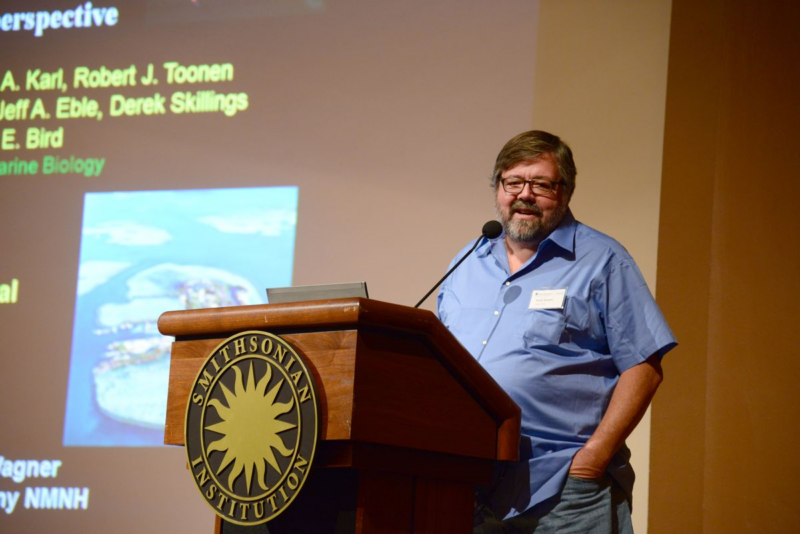
At HIMB, Dr. Bowen’s collaborative spirit is a cornerstone of the research community. Fellow HIMB Professor Robert Toonen notes, “We rely on his expertise to frame our studies and make sense of modern ecological observations. Knowing the history of a population is essential to predicting its future, and this ranking places Brian as the best in the world at uncovering that history.”
His influence is perhaps most deeply felt by the next generation of scientists. Josefa “Sefa” Muñoz, a current PhD student advised by Dr. Bowen, emphasizes his supportive guidance: “Dr. Bowen gives us the freedom to pursue challenging questions, but he’s always there to ensure our methodology is flawless. He taught me that understanding the genetic lineage of a sea turtle population is as important as counting the nests on a beach. He’s an exceptional scientist and an even better mentor.”
A Lifelong Explorer
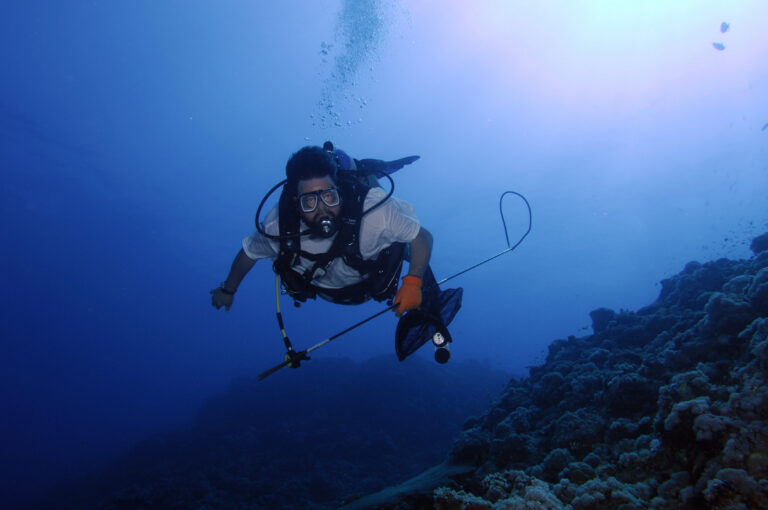
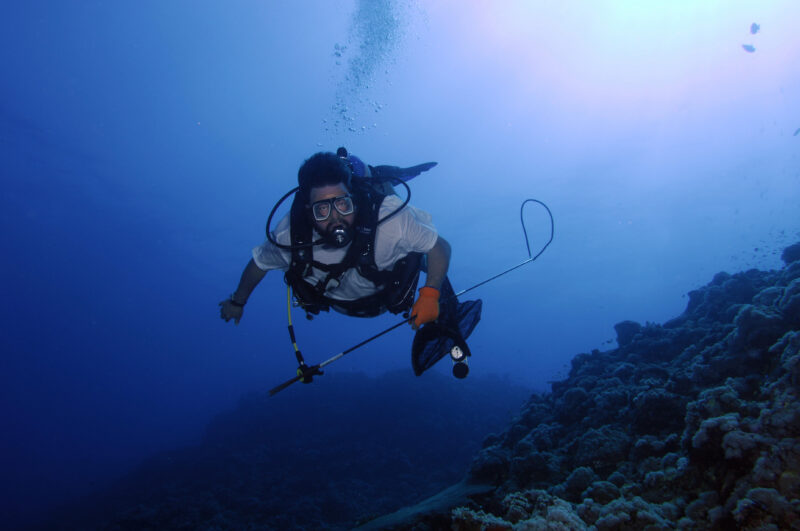
This adventurous spirit has always defined Dr. Bowen’s approach to science. Long before he was mapping genetic pathways, he was testing his own limits—completing the arduous 2,140-mile Appalachian Trail in 1981. That same drive to reach the unknown later led him to gain expertise in closed-circuit rebreather diving, allowing him to conduct research in the ocean’s “twilight zone” depths that few others can reach.
Reflecting on this latest ranking, Dr. Bowen expressed gratitude, viewing the accolade not as a finish line, but as validation of a career spent pushing boundaries.
“It is an incredible honor to receive this global recognition, but the real reward is knowing the work we do at HIMB provides tangible solutions for marine conservation,” states Dr. Bowen. “We have the genetic tools to identify vulnerable populations and guide effective management, and that mission remains the focus of our lab and every collaboration.”