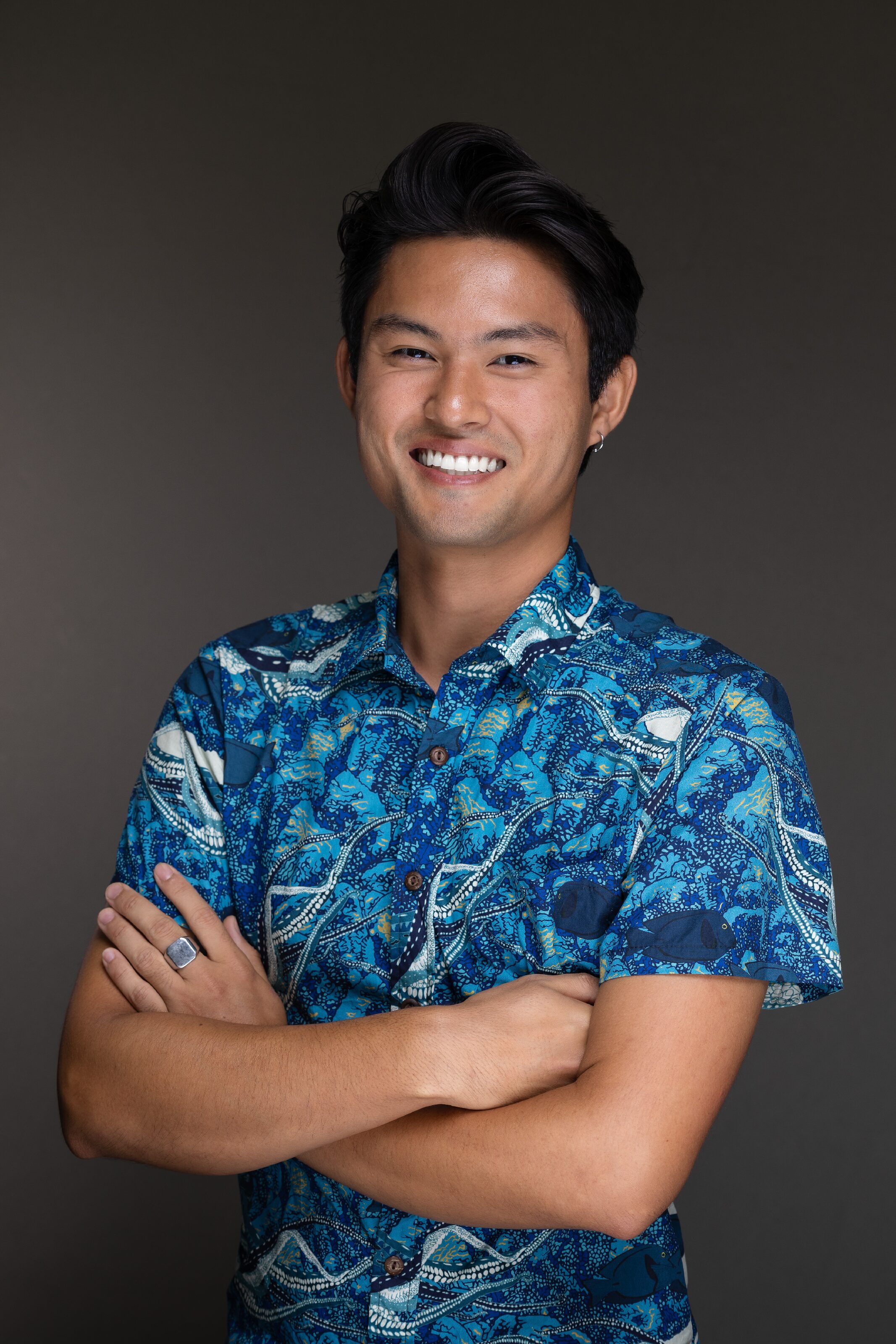
HIMB PhD Candidate Leon Tran Awarded Smith Fellowship for Fisheries Research
HIMB PhD candidate Leon Tran has been awarded the prestigious David H. Smith Conservation Research Fellowship to spearhead new methods for monitoring Hawaiʻi’s octopus fisheries. By utilizing environmental DNA (eDNA), Tran’s research will provide the first-ever population assessment of the Day Octopus (Heʻe mauli), bridging the gap between cutting-edge laboratory science and community-driven fishery management.


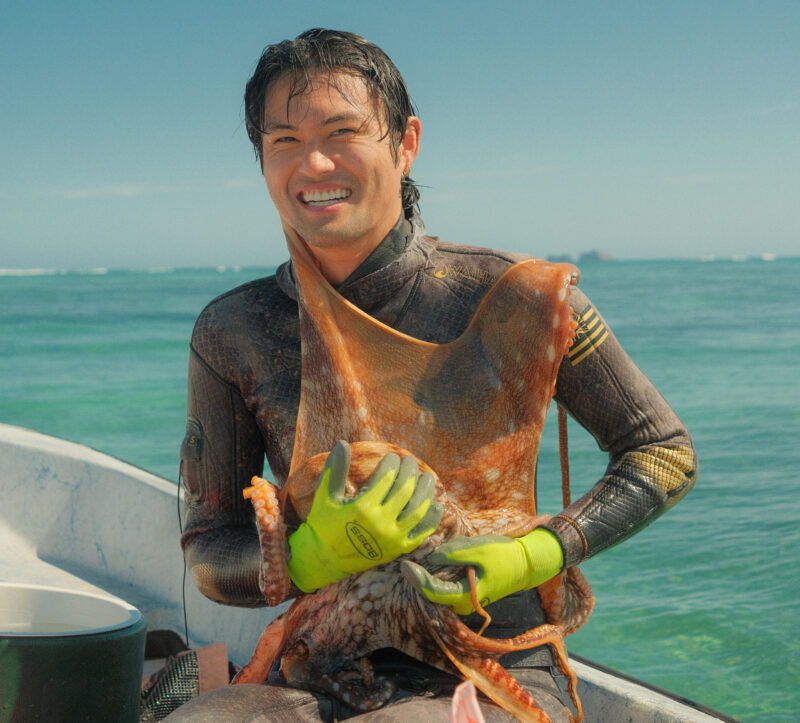
Leon Tran, in the field with his research subject. Photo courtesy of Leon Tran.
The future of Hawaiʻi’s coral reefs just got a significant boost. Leon Tran, a PhD candidate at the Hawaiʻi Institute of Marine Biology (HIMB), has been selected for one of the nation’s most prestigious awards in marine science. As he prepares to defend his dissertation, Tran has been named a recipient of the David H. Smith Conservation Research Fellowship.
According to Jacob Johansen, Principal Investigator of the HIMB Johansen Fish Resilience Program, the honor is well-placed. “Leon is one of the most promising young scientists from the Fish Resilience Lab,” he notes. “We couldn’t be happier, or more proud!”
Decoding the “Invisible” Fishery
The David H. Smith Fellowship—the premier postdoctoral award in conservation biology—will support Tran’s work on a unique challenge: monitoring species that are notoriously hard to find.
Octopus fisheries are expanding globally, yet because octopuses are masters of camouflage, tracking their populations is incredibly difficult. In Hawaiʻi, the Day Octopus (Heʻe mauli) is a cultural and economic staple, yet it is currently excluded from traditional monitoring.
To bridge this gap, Tran is utilizing environmental DNA (eDNA)—the genetic traces animals leave behind in the water. By combining aquarium experiments with water sampling and community fishing records, Tran aims to integrate eDNA into a formal population monitoring system. This project will produce the first-ever population assessment of the Hawaiian day octopus, providing a vital tool for community-driven fishery management.
Bridging Science and Practice
HIMB Director Megan Donahue explains that the approach Tran is employing is exactly what the field needs. “Leon’s work exemplifies the kind of forward-thinking science we strive for,” shares Donahue. “By bridging the gap between laboratory research and real-world conservation, he is providing the tools Hawaiʻi needs to protect its cultural and ecological heritage.”
As Tran completes his PhD in the coming months, his focus will shift to implementing this project. The results offer a new way to ensure that even the most “invisible” species are accounted for in our conservation plans.
“I am incredibly honored,” shares Tran. “Being able to apply my research to conserve Hawaiʻi’s marine ecosystems is humbling, and I am thrilled to work with such a dedicated team of managers and scientists to ensure our reefs remain resilient for generations to come.”