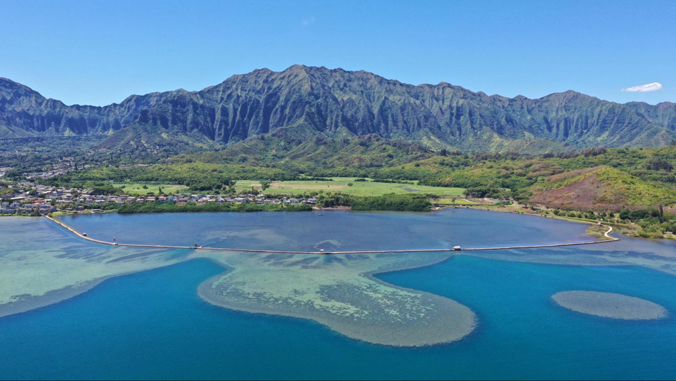
Could Fishponds Help With Hawai‘i’s Sustainability?


UH News, first published April 18, 2024.
Indigenous aquaculture systems in Hawai‘i, known as loko i‘a or fishponds, can increase the amount of fish and fisheries harvested both inside and outside of the pond. This is the focus of a study published by a team of researchers at the University of Hawai‘i at Mānoa Hawai‘i Institute of Marine Biology (HIMB). Today, aquaculture supplies less than 1% of Hawai‘i’s 70 million pounds of locally available seafood, but revitalization of loko i‘a has the potential to significantly increase locally available seafood.
According to historical accounts, loko i‘a can create surplus fish inside the pond, but their role as a nursery ground seeding surrounding fish populations has received less attention.
“We have demonstrated the ability of Indigenous aquaculture systems to produce a surplus of fish as well as supplement fisheries in the surrounding estuary,” said lead author and marine biology PhD candidate Anne Innes-Gold. “We have heard people voice the idea that historically, loko i‘a provided nursery grounds that may have supplemented fish populations in the estuary. Our study is the first that we are aware of to demonstrate this idea in academic literature.”
See the full story on UH News!