HIMB and Waikīkī Aquarium Launch Collaboration to Bring Papahānaumokuākea to the Community
To celebrate the one-year anniversary of the Papahānaumokuākea National Marine Sanctuary designation, HIMB and the Waikīkī Aquarium have launched "A Year of Hoʻolauleʻa." This strategic partnership brings the remote science and cultural significance of the Northwestern Hawaiian Islands to the public through a year-long seminar series, student field trips, and a modernized interactive exhibit.


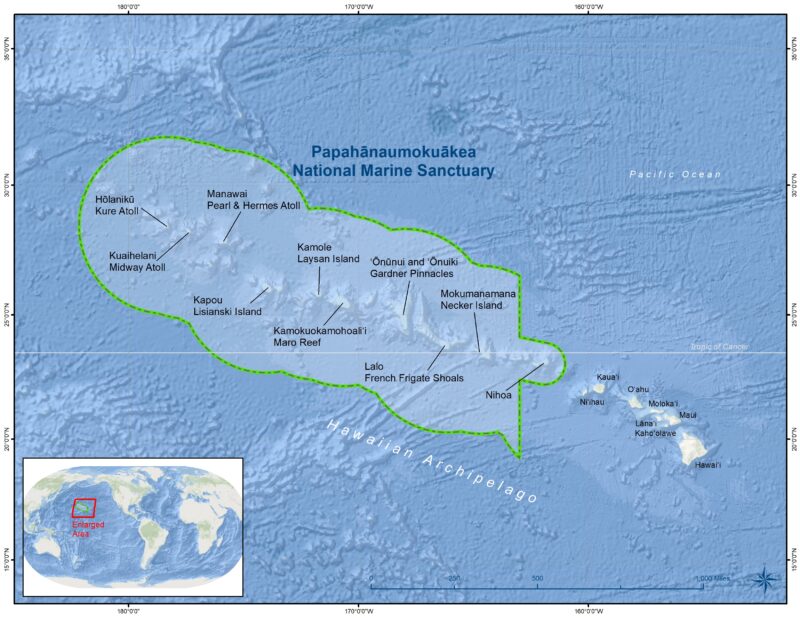
NOAA map of Papahānaumokuākea National Marine Sanctuary
In the remote reaches of the Pacific Ocean, where few humans have ever ventured, lies one of the most diverse and culturally significant ecosystems on Earth. March 2026 marked the one-year anniversary of the historic re-designation of these waters—Papahānaumokuākea—from a Monument to a National Marine Sanctuary. To celebrate this milestone, the University of Hawaiʻi at Mānoa is embarking on a strategic partnership to bring this remote and sacred environment directly to the public. Supported by a grant from the National Marine Sanctuary Foundation’s Sanctuary Community Fund, the Hawaiʻi Institute of Marine Biology (HIMB) and the Waikīkī Aquarium have launched “Papahānaumokuākea Marine National Sanctuary: A Year of Hoʻolauleʻa.”
This initiative tackles a significant barrier: the geographic inaccessibility of the Northwestern Hawaiian Islands. Spanning a 1,000-mile stretch of the archipelago and protecting over 7,000 species, the sanctuary is physically distant and heavily regulated. By utilizing the Waikīkī Aquarium as a “proxy” for these remote reefs, the project ensures that the history, research, and cultural significance of the sanctuary are accessible to the nearly 250,000 visitors who walk through the Aquarium’s doors each year.
“We will be hosting a series of lectures and potentially movie screenings throughout the year to increase awareness around the sanctuary,” shares Lauren Van Heukelem, who directs HIMB’s Center for Community Education and is the project’s Principal Investigator. “The grant will culminate in a re-opening of the Northwestern Hawaiian Islands Exhibit [at Waikīkī Aquarium in early 2027], with new touch screen kiosks and educational signage to highlight the uniqueness of the sanctuary.”
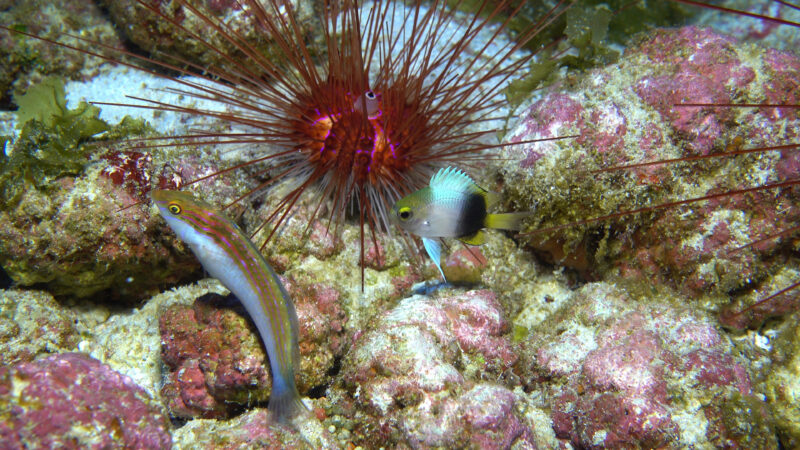
Rare species live at Hōlanikū (Kure Atoll). Credit: NOAA/Richard Pyle-Bishop Museum
Celebrating a Historic Milestone
The project officially kicked off last month with a large-scale 1st Anniversary Hoʻolauleʻa on Saturday, March 7, 2026, at the Waikīkī Aquarium. The event celebrated the one-year anniversary of the area’s designation change from a Monument to a National Marine Sanctuary—a move that doubled down on protections against commercial fishing and mining.
“The designation of the Papahānaumokuākea National Marine Sanctuary is a historic milestone for the future of our islands,” notes Van Heukelem. “While this protected ecosystem may seem distant, its health is deeply intertwined with the well-being of our community and natural environment. This award for ‘A Year of Hoʻolauleʻa’ serves as a bridge, allowing the Waikīkī Aquarium in partnership with the Hawaiʻi Institute of Marine Biology to bring stories and science from the Sanctuary to our local community and visitors alike, ensuring our community remains connected to this biologically and culturally sacred place.”
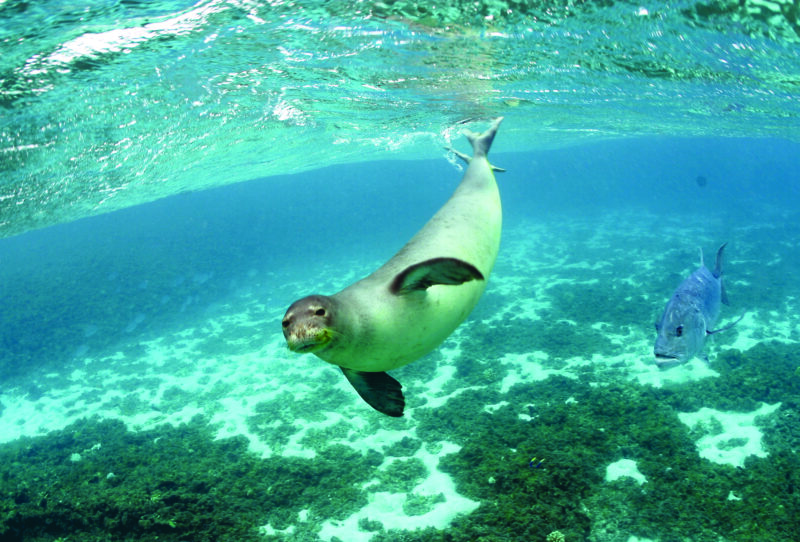
Hawaiian monk seal and a giant trevally at Hōlanikū (Kure Atoll). Credit: James Watt/NOAA
A Natural Partnership
The collaboration highlights the unique synergy between HIMB’s research prowess and the Aquarium’s public reach. A major pillar of the project is the modernization of the Northwestern Hawaiian Island (NWHI) Exhibit. This 4,000-gallon display is undergoing a revitalization to reflect its new Sanctuary status, featuring interactive audio of Hawaiian monk seal vocalizations and coral fragments collected by HIMB researchers during expeditions to Lalo (French Frigate Shoals).
“We are so excited to be collaborating with HIMB on this project to share the important stories of the Sanctuary with visitors to the Aquarium,” shares Judy Lemus, Interim Director of the Waikīkī Aquarium and Co-PI of the project. “It’s a natural partnership because the Aquarium is also working with several scientists at HIMB to highlight their research and connect scientific discoveries with what our visitors experience in our exhibits.”
HIMB Director Megan Donahue emphasizes the impact of bringing these scientific discoveries to the public. “HIMB has a long history of partnership with the Papahānaumokuākea Marine National Monument, working with NOAA to understand the ecology and resilience of reefs and wildlife in the Northwestern Hawaiian Islands. Building on this history, we are excited to bring HIMB science to the public at the Waikiki Aquarium, inspiring a deeper understanding of this protected area.”
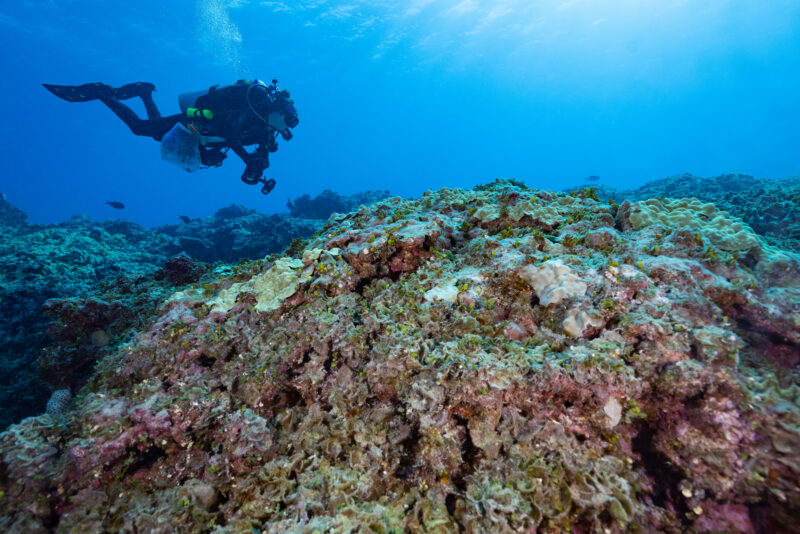
Scientist surveys algal growth in Papahānaumokuāke. Credit: Kimberly Jeffries/NOAA
Enhanced Sanctuary Storytelling
“Papahānaumokuākea Marine National Sanctuary: A Year of Hoʻolauleʻa” will additionally bring the sanctuary to life through a seminar series. Hosted in the Waikīkī Aquarium classroom, these free public talks will showcase the research and cultural practices that define the region.
The initiative also invests in the next generation of marine stewards. Through huakaʻi (field trips), Waikīkī Aquarium volunteers and HIMB students and staff will visit the NOAA Inouye Regional Center and the Pacific Island Oceans Exploration Center. These experiences provide a rare look into the federal management and exploration of the sanctuary system, fostering professional connections for local students and volunteers.
As the “Year of Hoʻolauleʻa” concludes in early 2027, the 1,200-mile gap to our northernmost reefs will feel a little smaller. By bringing the science and spirit of the sanctuary home, this partnership ensures that Papahānaumokuākea remains a living part of our collective identity. Ultimately, this project aims to transform thousands of visitors into advocates, anchoring the protection of this world-class treasure in a community-led commitment to stewardship.