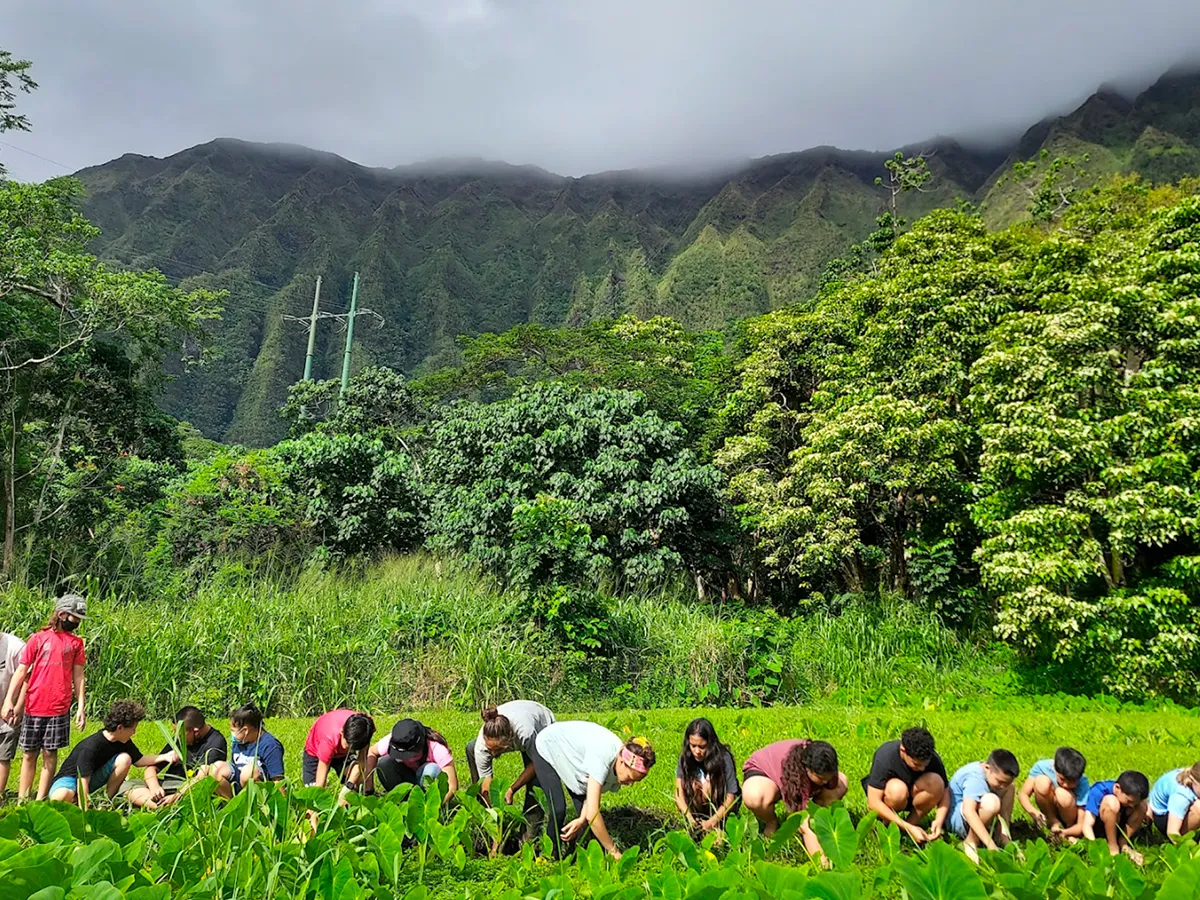
Book A Class Field Trip
HIMB is dedicated to empowering educators, offering inspiring workshops and providing essential tools to bring marine science lessons to life.
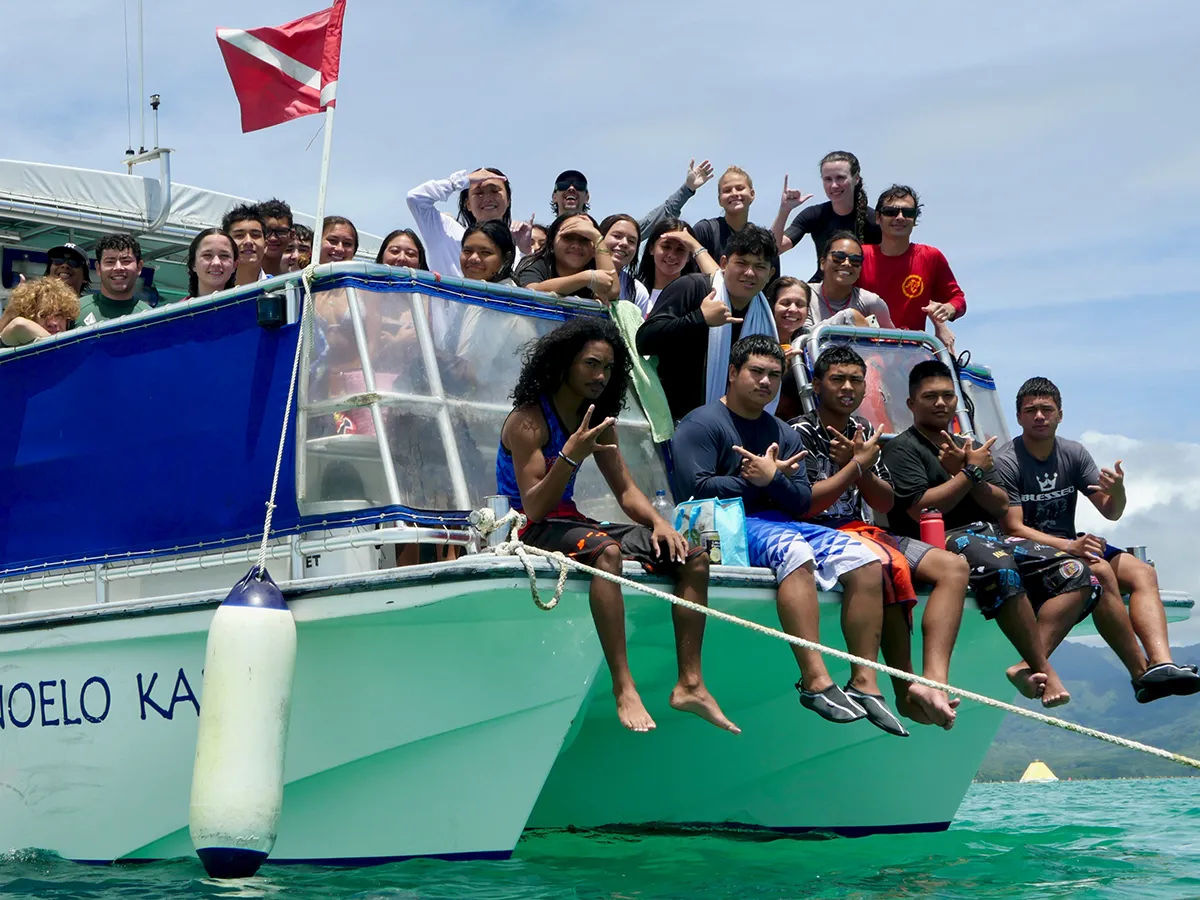
Teacher Professional Development
HIMB MakerLab
The HIMB MakerLab is a discovery lab and makerspace focused on the intersection of science and educational research. The MakerLab offers innovative professional development for undergraduate and graduate students, with a goal of integrating different knowledge systems and ways of knowing. The program also employs a community-based participatory research approach to science education and outreach, designing and studying learning environments that encourage creativity, science, art, service, and civic engagement.
Teachers on the Estuary (ToTE)
The He‘eia National Estuarine Research Reserve (NERR) supports "Teachers on the Estuary," a year-long professional learning program dedicated to developing ‘āina-based learning opportunities for Ko‘olau region educators teaching students from preschool through high school. Teachers engage with and learn from community partners while observing ‘āina restoration and education programs across four sites in He‘eia, including stream, wetland, lo‘i, loko i‘a, shoreline, and ocean areas. The program culminates in teachers sharing their specific ‘āina projects, ensuring they have the resources and connections to bring place-based, environmental stewardship into their classrooms.