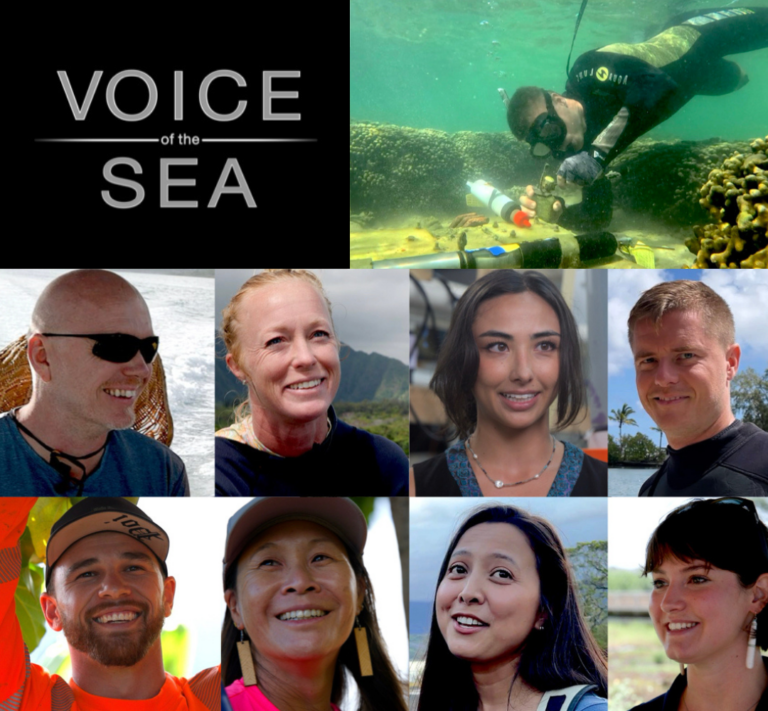
Hawai’i Sea Grant “Voice of the Sea” Episode Features HIMB Research
This episode of "Voice of the Sea" explores how researchers at the Hawaiʻi Institute of Marine Biology are tackling the challenge of sediment runoff in Kāneʻohe Bay. By investigating the tolerance limits of reef fish and monitoring the success of wetland restoration, HIMB scientists and partners are establishing the water quality standards necessary to ensure healthy corals and abundant nearshore fisheries.


The latest episode of Voice of the Sea highlights research at the Hawaiʻi Institute of Marine Biology (HIMB) focused on the impacts of sediment runoff in Kāneʻohe Bay. While runoff occurs naturally, human activity can increase sediment levels tenfold, degrading nearshore habitats and threatening the health of coral reef ecosystems.
The episode features the Johansen Fish Resilience Lab and their work to determine the specific tolerance limits of reef fish. By conducting behavioral experiments and monitoring areas where wetlands and loko iʻa (fishponds) have been revitalized, researchers are gaining new insights into how water quality shapes fish abundance. The episode also features insights from HIMB faculty Lisa McManus of the Marine Ecological Theory Lab and Yoshimi Rii of the Heʻeia National Estuarine Research Reserve (NERR).
Featured in this Episode:
Sediment Research: An inside look at how HIMB scientists study the response of herbivorous fishes to muddy water and the resulting vulnerability of corals to algae overgrowth.
Community Partnerships: A showcase of how ʻāina stewards and HIMB researchers collaborate to monitor the positive effects of wetland and stream restoration on reef health.
Data-Driven Solutions: An exploration of how lab data and mathematical models are used to develop water quality thresholds aimed at protecting Hawaiʻi’s nearshore resources.